
We create positive change by connecting separate worlds. Can’t think of a better reason to be in business.

Combining perspectives from different places – identifing strategies, positions and ideas that may surprise you
Analyses and Insights. What we read and write, share and think about
AI, Creativity, and the Danish Exception
AI is already transforming sectors like healthcare, logistics, and analysis – freeing up time, reducing errors, and boosting efficiency. But in creative work, something else is at stake. Here, the issue isn’t how fast we adapt – but what we risk losing when speed and streamlining replace friction, slowness, and judgment. Denmark has long punched above its weight creatively – not by scaling content, but by investing in conditions that made originality possible. As AI enters the cultural sector, the real question isn’t how well we use it. It’s whether we’re still willing to protect the systems that make creativity more than content.
Five Trends Communications Teams Will Be Forced to Confront in 2026
In a Kforum column, our CEO Kresten Schultz Jørgensen outlines five developments that will push communications teams away from comfort and surface-level storytelling in 2026. According to Kresten, the profession is entering a more demanding phase – one defined by consequence, conflict, and responsibility rather than symbolism and rhetoric. He points to five pressure points: ESG and DEI shifting from moral narratives to leadership disciplines; AI redefining the creative contract of the profession; branding moving from emotional storytelling to long-term legitimacy; opinion-based communication becoming unavoidable in a polarized public sphere; and top executives emerging as both the most powerful and most vulnerable communication channel. Across all five trends runs one shared requirement: judgment. Not as individual intuition, but as an organizational capability.
AI Won’t Dehumanize Organizations – But It May Make Them Avoid Conflict
In a Børsen op-ed, our CEO Kresten Schultz Jørgensen argues that the real risk of AI in organizations is not necessarily a loss of empathy or creativity, but a loss of disagreement. While AI promises speed, efficiency, and smoother decision-making, it can quietly remove the friction, resistance, and professional debate where judgment and responsibility are forged. Drawing on research and Danish organizational culture, Kresten warns that AI can become a convenient substitute for leadership – flattening authority, accelerating decisions, and masking power behind dashboards and “governance.” His conclusion is clear: AI does not require faster implementation or more tools, but leaders willing to carry tension, protect professional disagreement, and ensure that efficiency never silences judgment.

AI Will Not Dehumanize Organizations. It Will Flatten Them
The real risk of AI isn’t cold efficiency. It’s quiet sameness. When language is streamlined, disagreement fades, and decisions speed up without pause, something important gets lost. Not presence. But edge. As organizations embrace AI, the challenge isn’t to protect the human – it’s to protect the friction that makes judgment possible. Because when everything sounds reasonable, it takes leadership to say no. And when everything moves faster, it takes courage to slow down.

AI, Creativity, and the Danish Exception
AI is already transforming sectors like healthcare, logistics, and analysis – freeing up time, reducing errors, and boosting efficiency. But in creative work, something else is at stake. Here, the issue isn’t how fast we adapt – but what we risk losing when speed and streamlining replace friction, slowness, and judgment. Denmark has long punched above its weight creatively – not by scaling content, but by investing in conditions that made originality possible. As AI enters the cultural sector, the real question isn’t how well we use it. It’s whether we’re still willing to protect the systems that make creativity more than content.

When Narratives Become Infrastructure
Narratives used to sit on top of strategy – a way to explain decisions, align messages, soften the edges. Not anymore. In today’s organisations, narrative is no longer just decoration but rather the infrastructure. A shared frame that holds identity together as facts fragment, time compresses, and change accelerates. When plans fail and data overwhelms, it’s not more information we need – it’s orientation. And the organisations that learn to narrate themselves well won’t just sound coherent. They’ll stay coherent.
Projects







.webp)


Our services are not a window of prototype products:
We see who you are, your potential and probably also your limitations. We challenge you by connecting wisdom from politics, business and culture.
And then we find what you truly need.

Buzzing
Featured podcasts
Media, Power and Provocation on Q&CO
In conversation with Henrik Qvortrup, Kresten Schultz Jørgensen tackles media responsibility, image ethics, and the price of silence.


Media, Power and Provocation on Q&CO
Leadership Nuances Unpacked
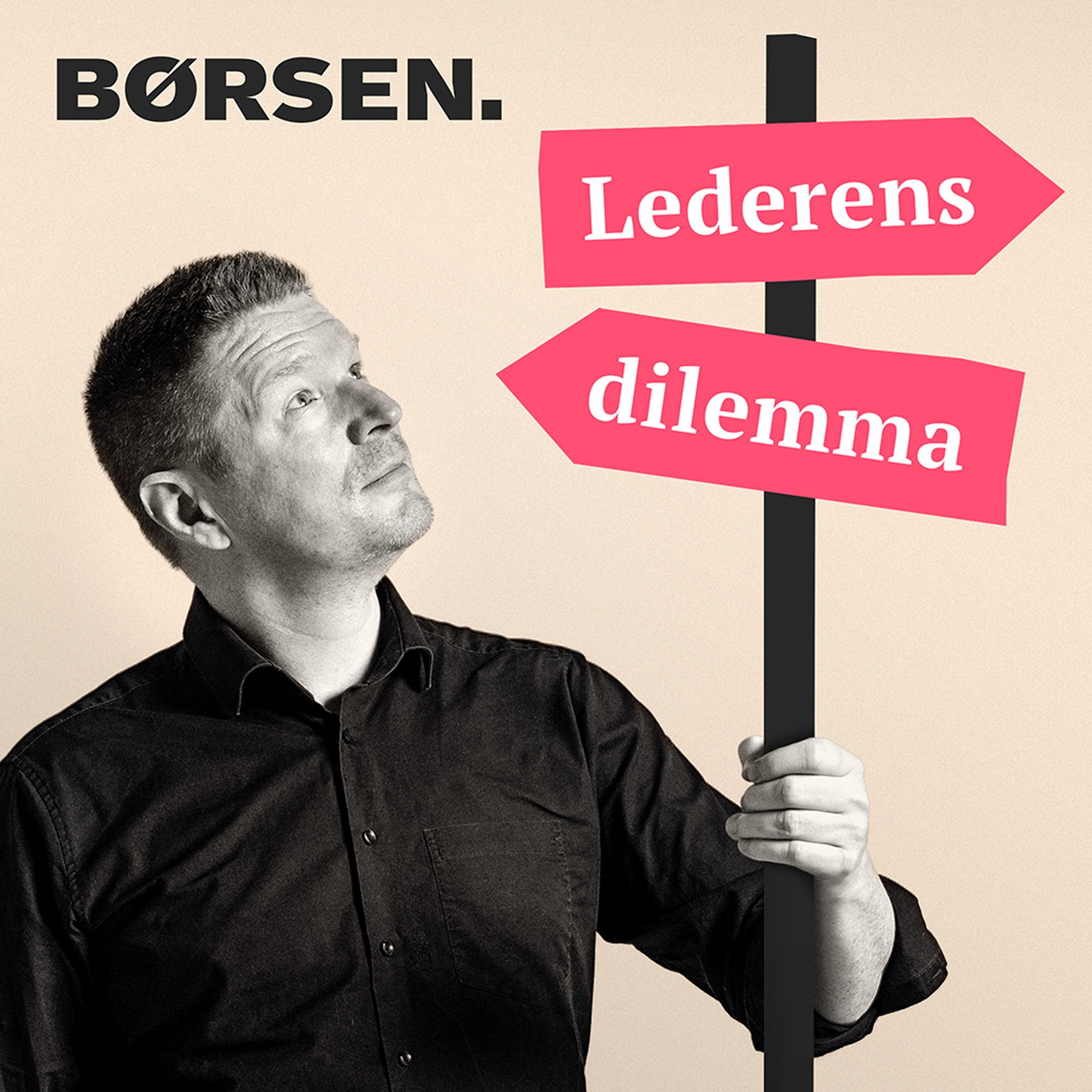
Grateful to Børsen for a thoughtful panel on leadership, from loyalty to personal branding, with insights from top experts Claus Richter and Pernille Steen Pedersen and Kresten from SJ&K.
Leadership Nuances Unpacked
Was it cynical spin when the owning family behind Nordic Waste finally broke their silence?
Was it cynical spin when the owning family behind Nordic Waste finally broke their silence? Kresten comments in this podcast.

Was it cynical spin when the owning family behind Nordic Waste finally broke their silence?

Welcome to Tom & Kresten
An intellectual cushion room for those who care about communication – or are simply curious about the world.
Every month, two seasoned advisors meet at the mic to unpack what lies beneath the messages of the moment: big ideas, subtle trends, and timeless thinking.
We meet once a month. And we promise: it’s never boring. Just necessary. Tune in – and think along.
The Year That Was. And What Comes Next.
The Year That Was. And What Comes Next.
In Praise of Good Language
In Praise of Good Language
AI and the Age of Strategic Nonsense
AI and the Age of Strategic Nonsense
Frankly, we are very few people – and we take pride in keeping it that way. We call it the inverted pyramid.
We know politics, business and culture. We write books and read a lot. You probably know us already.
